The NeuroACT Program
ADHD Support Australia is proud to offer the NeuroACT Program for Adults (16+) online. This evidence-based, 12-week online program is designed specifically for the neurodiverse community and for individuals experiencing high stress levels.
Next Group for 2026
12 March 2026 – Thursdays @ 5-6:30pm
NeuroACT Key Information
- 12 weekly 90-minute online group sessions (groups of 6–12)
- Relaxed, supportive format
- Weekly worksheets, handouts, planners and homework
- Access to video content and Focus Exercises on the NeuroACT platform
- Program fee: $1,980 (incl. GST)
Includes:
- 1 intake interview
- 12 x 90 minute weekly sessions
- All program materials
- Platform access
- Ongoing support
- Great value: $165/week
- Use NDIS funding if available.
NeuroACT Program Overview
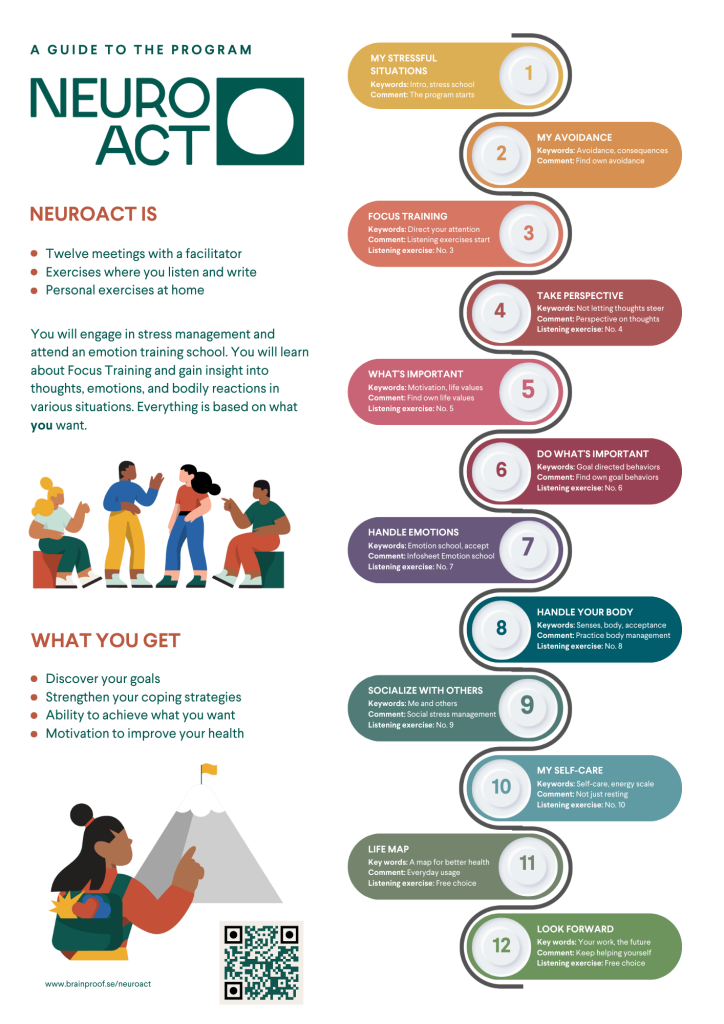
The program teaches essential skills to address challenges with executive and adaptive functions, helping participants reduce stress and improve quality of life by supporting them to do more of what matters most.
Developed in consultation with autistic people, NeuroACT helps individuals manage stressful situations such as sensory overload (sounds, smells, tactile experiences), emotional and bodily unawareness or dysregulation, unfamiliar events, environmental changes or situations that exceed social capacity.
When these stressors feel unmanageable, they often lead to difficult thoughts and feelings such as worry and sadness. The body may tense up, making everything feel harder and limiting one’s ability to cope with both familiar and new situations. Over time, this can negatively affect mental and physical health.
NeuroACT methods draw on the behavioural science of Acceptance and Commitment Therapy (ACT)—a form of cognitive behavioural therapy (CBT)—alongside neuroscience, particularly neuropsychology and executive function research.
By enhancing stress management skills, NeuroACT reduces avoidance and supports meaningful behaviours and activities that improve overall quality of life.
This is achieved through:
Motivation techniques – identifying what’s truly important to the individual (not what parents, peers, or society dictate) and setting clear behaviour goals
Adversity skills – perspective-taking, accepting emotions and bodily reactions
Psychoeducation – practical knowledge on common neurodivergent challenges such as stress, emotions, sensory experiences and body signals
Tailored for Neurodivergent Needs
Developed in consultation with autistic individuals, NeuroACT is especially effective in addressing challenges such as sensory overload, emotional dysregulation and changes in routine or environment.
Skills and Benefits
The overall goal is increased psychological flexibility—building resilience, reducing avoidance and pursuing personally meaningful goals.
Participants will learn to:
- Clarify personal values and set meaningful behaviour goals
- Improve emotional and physical self-awareness
- Understand stress, emotions and sensory input through a neurodivergent lens
NeuroACT Program Guide
How to Get Started With NeuroACT
- First, check that the program dates/times work for you and that it fits your budget.
- If you want to join, but don’t want a call, complete your intake forms here and I’ll be in touch.
- Book a complimentary zoom call (with you and/or your young person) to meet me, ask questions and confirm the program is a good fit here.
- You’ll be prompted to complete a short online form so I have some details ahead of our call.
- Accept the emailed invitation so the call is added to our calendars.
- After the call, if either of us feels the program isn’t suitable, there’s no obligation to continue.
- If moving forward, you’ll receive an intake form and invoice.
- Once your forms are completed and your invoice settled your place will be secured.
- If using NDIS funds, begin arrangements early to ensure it’s in place prior to the program start.
- Once enrolments are confirmed, I’ll create a suitable group and share details via email.
- If the current dates don’t suit, or for future course info, email vi****@**********************om.au
- For UK/Europe participants, contact in**@*****************uk.com
Watch the NeuroACT Video to Learn More
Further Reading
The NeuroACT program has been developed by experts in the field specifically for neurodiverse people and those with elevated stress levels and mental health challenges.
NeuroACT has been evaluated at the esteemed Karolinska Institute as a highly effective program, delivering positive outcomes for its participants.
The studies are part of the doctoral dissertation by Johan Pahnke:
Meet Your NeuroACT Facilitator – Vivian Dunstan

- Certified NeuroACT Program Provider
- Certified PEERS Social Skills Provider (Teens & Young Adults)
- ADHD Coach (ADDCA Advanced)
- Author of The Ultimate ADHD Parenting Handbook: Empowering Your Family to Thrive
- Facilitator of The Ultimate ADHD Parenting Program
- Certified Digital Health Educator (NIDHW)
- Facilitator of the Digital Parenting Program
- Host of the monthly expert speaker series since 2013
- Qualified Teacher
- Founder of ADHD Support Australia
- Experienced mum of a neurodivergent young adult
- Woman with ADHD
Vivian has been supporting the ADHD and neurodiverse community since 2013.